
Develop
Our idea is to integrate immunohistochemistry as early as possible in the hybridoma screening procedure and thereby expand the classical ELISA screen by histopathological expertise at an early stage of FFPE antibody development.

01 / Antibody intelligence, made actionable
Monoclonal research antibodies for researchers, pathologists and biomarker teams who need evidence they can inspect.
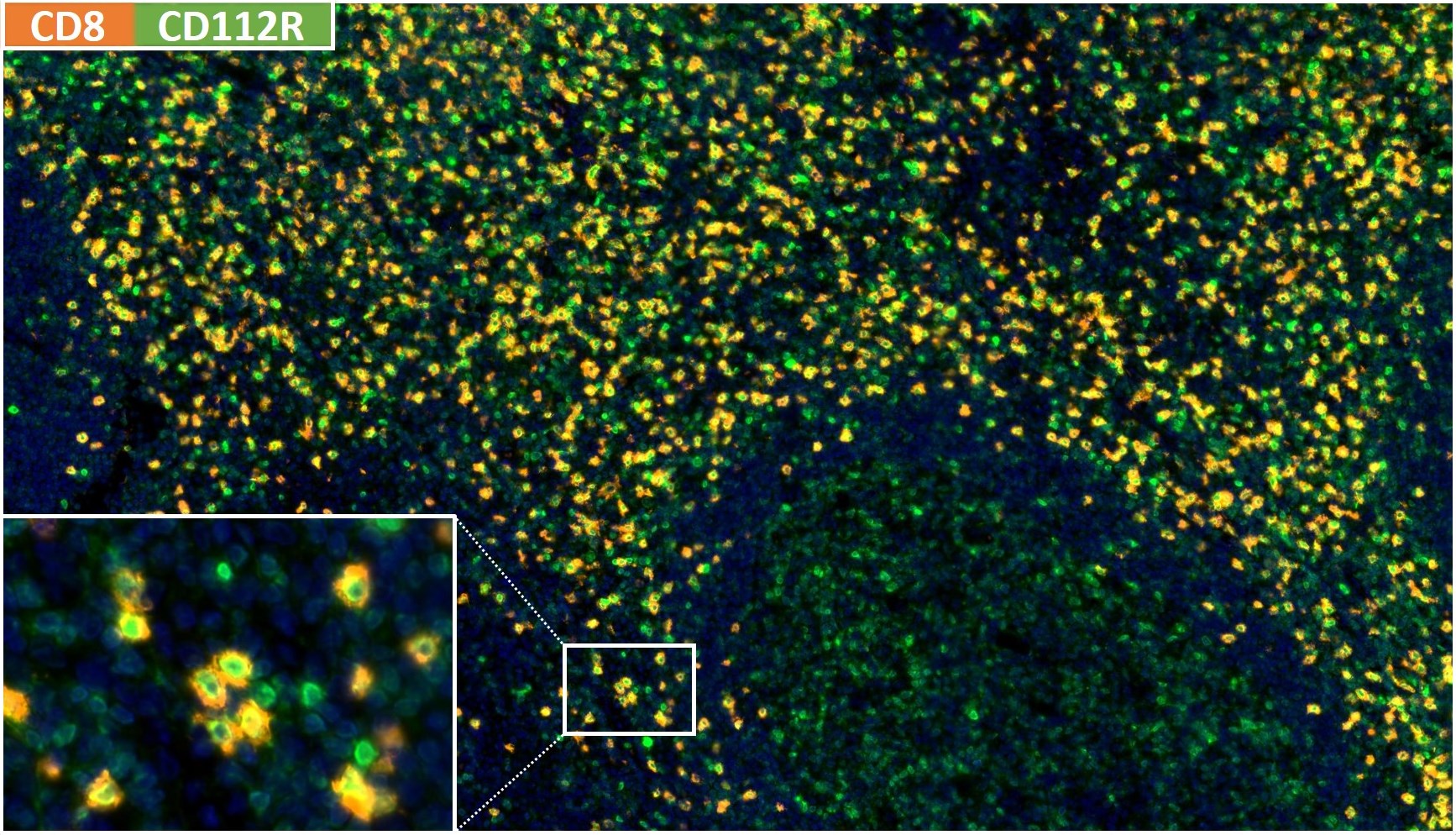
CD8 × CD112R multiplexHuman tonsil · Clones TC8 + R12 · Fluorescence IHC
For Research Use Only. Not for use in diagnostic procedures.
02 Scientific finder
Six monoclonal clones for tissue-based immuno-oncology research — searchable by target, clone and application.
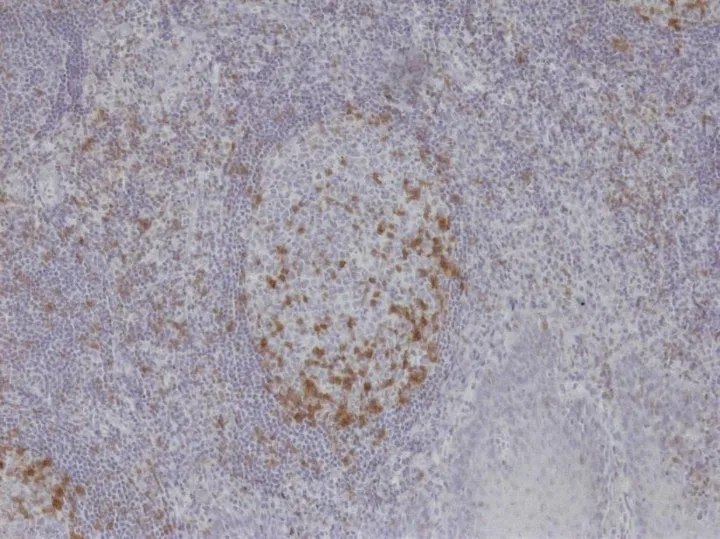 TIGITClone TG1 · DIA-TG1-MClone-specifically published mouse monoclonal anti-TIGIT antibody for human FFPE, brightfield and fluorescence multiplex IHC. RRID AB_3750391.Product page ↗
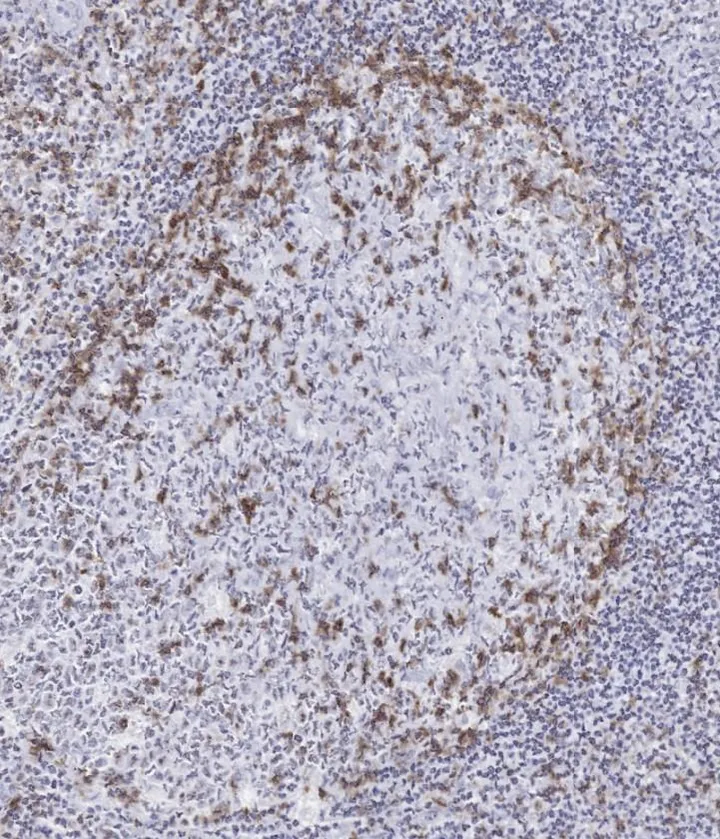 TIGITClone TG2 · DIA-TG2-MSeparate anti-TIGIT clone for IHC on human FFPE tissue. Kept strictly distinct from TG1.Product page ↗
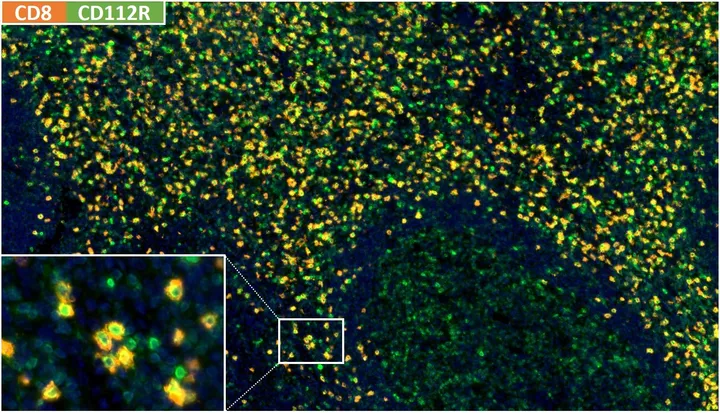 CD112R / PVRIGClone R12 · DIA-R12Anti-CD112R/PVRIG antibody used in a peer-reviewed multiplex immunofluorescence study (Yang et al., Modern Pathology 2023).Product page ↗
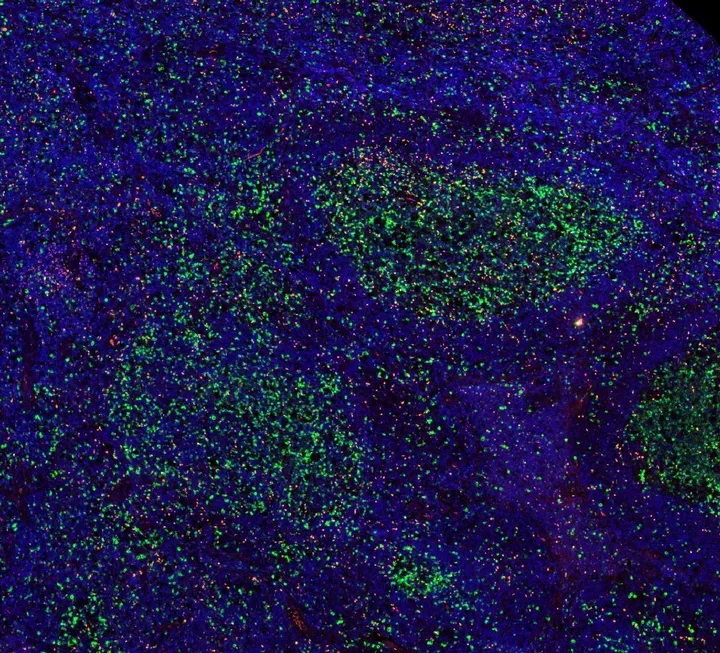 FOXP3Clone FX3 · DIA-FX3Nuclear FOXP3 detection in human FFPE tissue; used in a peer-reviewed automated multiplex IF study (Picard et al., Acta Neuropathologica 2023).Product page ↗
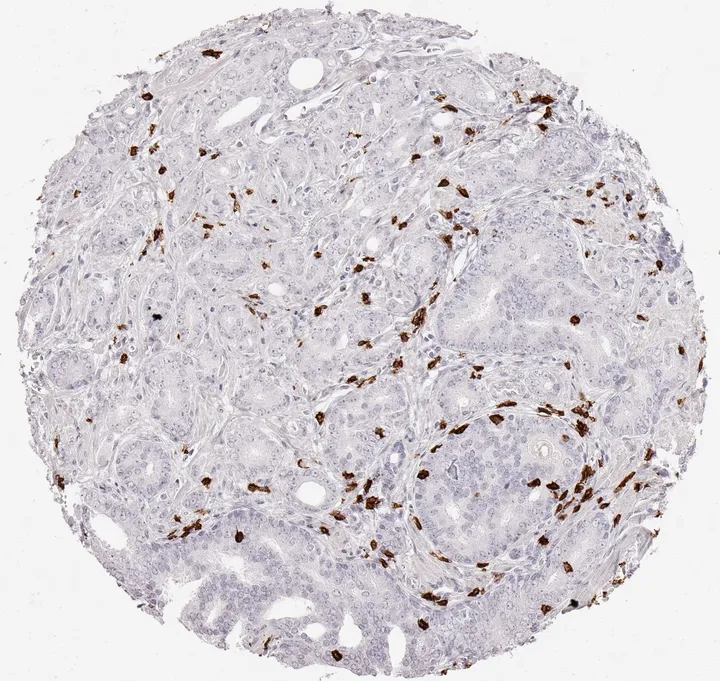 CD8Clone TC8 · DIA-TC8Anti-CD8 antibody with five peer-reviewed clone-specific publications on large human tumor cohorts.Product page ↗
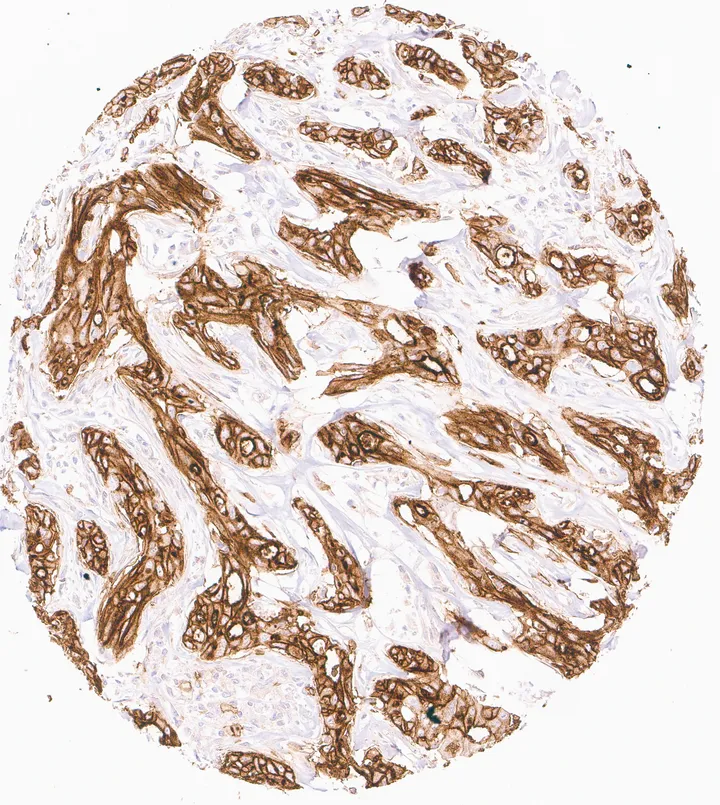 CD73Clone KK3 · DIA-KK3Mouse monoclonal anti-CD73 (NT5E) antibody for IHC on routine human FFPE tissue; membranous staining pattern, tonsil as positive control; ten original ONCOdianova tissue figures.Product page ↗
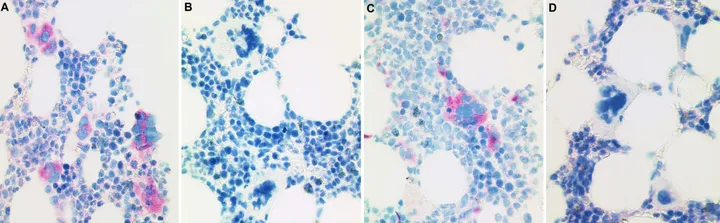 Mutant CALR (calreticulin)Clone CAL2® · dedicated siteCAL2® — mutation-specific antibody for mutant CALR. Dedicated scientific information, methodology, evidence and ordering information are available at cal2antibody.com. For Research Use Only. Not for diagnostic or therapeutic use.Explore CAL2® →
No marker matches this search.
03 How we work
Our idea is to integrate immunohistochemistry as early as possible in the hybridoma screening procedure and thereby expand the classical ELISA screen by histopathological expertise at an early stage of FFPE antibody development.

We use our strong network for histopathological validation of new targets in human tissues. This expands our expertise to develop new test systems for novel targets. For cancer immunology targets we put a focus on tumor infiltrating lymphocytes.

Multiplex Assay technology develops fast and depends on the availability of reliable antibody reagents. Our vision is to provide the best cancer immunology marker antibodies for combined use to improve the understanding of patient subpopulations.

Our objective is to potentially develop multiple clones for the same target by approaching one target at diverse immunogenic sites. We are able to reference mapped epitopes and open for beta testing opportunities with pharmaceutical partners.
04 Validation framework
Every product page documents peer-reviewed clone-specific evidence, congress abstracts and technical specifications, with references, catalog numbers and RRIDs where assigned.
Request a data package ↗Context-led clone evaluation with immunohistochemistry integrated early in development.
Pattern assessment across human normal and tumor tissues with defined positive controls.
Clone-specific use documented in peer-reviewed studies where available — each cited with DOI on the product page.
Products are organised around the questions research teams actually ask: immune phenotype, checkpoint axes, spatial arrangement and tumour context.
CD8 × CD112R multiplex · Human tonsil · Clones TC8 + R12
05 Ordering & next steps
ONCOdianova products are available through our ordering partner BIOZOL and selected distributors. Every route maps a specialist question to a product, a document or a conversation.